


THE CASE FOR PEA PEPTIDES
WHAT ARE PEA PEPTIDES
Pea proteins are chains of amino acids extracted from traditional garden peas. Once the protein has been extracted from the pea, it is then broken down into peptides and reacted with water to form an ingredient that can easily penetrate the hair shaft. Pea peptides have a balanced profile that consists of multiple amino acids, including serine, aspartic acid, leucine, lysine, glutamic acid, and arginine.
WHY DOES ROUTINE WELLNESS USE PEA PEPTIDES
Pea peptides work to smooth the hair’s cuticle, helping to improve overall hair health. Their small amino acid particles bond to the hair, linking together to form a protective structure. This protective shield helps:
- Minimize damage
- Enhance shine
- Improve manageability
- Increase volume
- Support scalp health
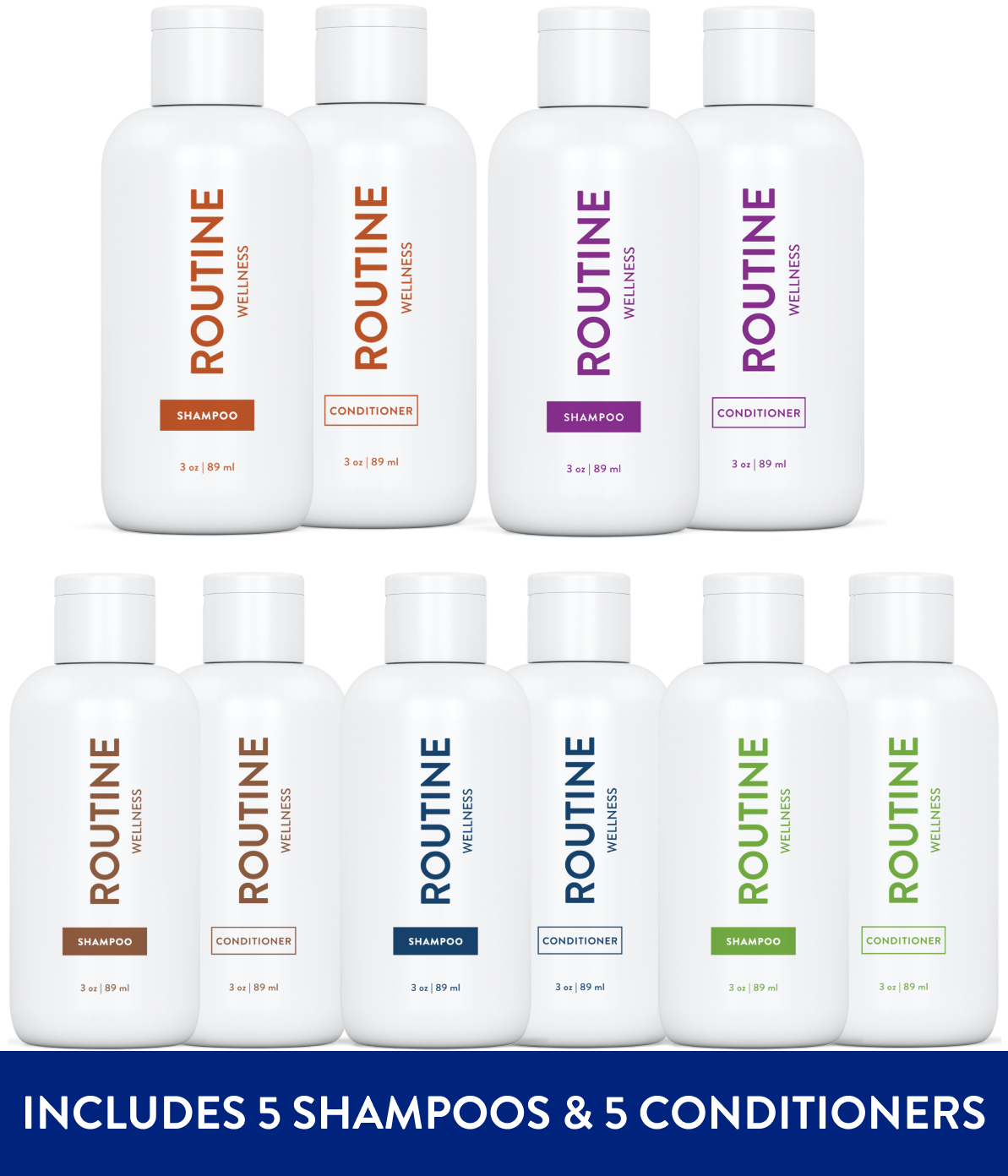
Pea peptides, in particular, have been shown in studies to not only form a protective film on the hair but also create a favorable environment for follicle stimulation and hair growth. That’s why we use pea peptides in every bottle of Routine Wellness Shampoo and Conditioner.
THE SCIENCE
Damaged hair has a rough, raised outer layer that carries a negative charge. Amino acids have a positive charge, so they’re naturally attracted to damaged hair. When you use products with pea peptides, these amino acids stick to the hair and form a lightweight protective layer. This helps smooth the hair’s surface and hold the strands together, reducing breakage. With a smoother surface, hair can better retain moisture, which leads to more shine, easier detangling, and improved overall manageability.
When clinically tested, Routine Wellness Shampoo & Conditioner showed a 45% reduction in breakage, 79% increase in shine, 80% closure of split ends, 73% reduction in frizz, and a 150% increase in volume after use.
REFERENCES
Alonso, L. & Fuchs, E. (2006) The hair cycle, Journal of Cell Science, issue 119, (pp. 391-393).
Arginine Derived Nitric Oxide: Key to Healthy Skin, Bioactive Dietary Factors and Plant Extracts in Dermatology (pp. 73-82).
